Cat and Mouse Playing Chess Review
As an embroidery designer who has spent years turning digital concepts into tactile brand assets, I approach every new file with a critical eye. We are not just looking for something that looks pretty in the hoop; we are looking for viability. Does this design hold up under tension? Is it recognizable at three inches wide? Does it communicate the right message to a customer scrolling through an Etsy shop or browsing a boutique rack?
This is where Cat and Mouse Playing Chess enters the conversation. The product description promises "elegance" and "beautiful detail," which are high bars to clear in machine embroidery. For small business owners, apparel decorators, and handmade brands, finding a design that balances playfulness with professionalism is rare. After reviewing the visual structure of this piece, I have compiled a practical assessment focused on its application for branded merchandise, patches, uniforms, and commercial projects.
First Impressions: Visual Personality and Brand Fit
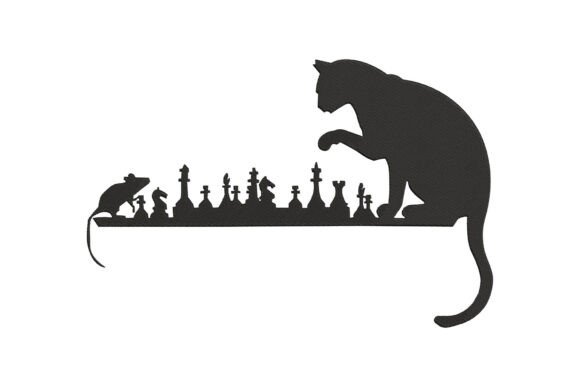
The title Cat and Mouse Playing Chess immediately suggests a narrative. In branding, narrative is everything. This isn’t just a generic animal motif; it implies strategy, intellect, and a touch of whimsy. When I first visualize this design on a product, I see a brand that doesn’t take itself too seriously but still values quality.
The description highlights elegance. In embroidery terms, this usually means clean lines, balanced negative space, and a lack of cluttered fill stitches that can pucker fabric. If executed well, this design feels premium. It avoids the overly rustic or chaotic look that often plagues lower-quality digital files. Instead, it leans toward a classic, perhaps even slightly vintage aesthetic, which pairs exceptionally well with:
- Boutique coffee shops and bakeries
- Pet-focused brands with a sophisticated edge
- Creative studios and artisanal craft businesses
- Etsy sellers targeting gift buyers
For these audiences, Cat and Mouse Playing Chess acts as more than decoration; it is a conversation starter. It signals that the brand understands humor and culture, which increases customer engagement and memorability.
Real-World Business Applications
The true test of any machine embroidery design is its versatility across different mediums. Here is how I see this design performing in real-world small business scenarios.
Embroidered Patches and Branding Accents
One of the strongest use cases for this design is as an embroidered patch. Because chess pieces and animals have distinct silhouettes, they tend to digitize well at smaller scales. A small chest logo on a work shirt featuring a simplified version of this scene can elevate a basic uniform into a branded asset. Similarly, attaching a finished patch to a denim jacket or a canvas tote bag adds immediate perceived value.
For small business merch, these patches serve as excellent customer gifts or loyalty rewards. They feel personal and handmade, which drives repeat purchases.
Apparel and Accessories
When applied to custom apparel, such as apron embroidery for a bakery or cap embroidery for a creative agency, the design offers a focal point without overwhelming the garment. On a tote bag design, it works beautifully centered or offset, providing a graphic element that stands out against plain cotton or canvas textures.
I also see potential here for product packaging accents. A small, neatly stitched label on a box of handmade goods or a branded tag on a garment can use this motif to reinforce brand identity before the customer even opens the package.
Where Caution Is Required
While the concept is strong, not every surface is created equal. As a designer, I must advise caution in specific applications to ensure the finished product meets professional standards.
- Small Patch Sizes: If you plan to embroider this at a size smaller than 2.5 inches, you must verify the stitch density. Too many fine details crammed into a tiny area will result in a muddy blob rather than a crisp image. Simplify the design if scaling down significantly.
- Curved Surfaces: Embroidering on the front of a cap or a curved mug sleeve requires careful hooping. Complex designs like Cat and Mouse Playing Chess may distort if the fabric stretches unevenly during stitching. Always use a stiffener or proper stabilizer to maintain shape.
- Dark Uniforms and Contrast: Check your thread colors carefully. If the design relies on subtle shading or light outlines, it may get lost on dark fabrics. High contrast is key for legibility. Test a sample on the actual fabric color before committing to bulk production.
- Frequent Washing: For items like aprons or work shirts that undergo heavy laundering, dense stitch areas can become stiff or prone to fraying over time. Ensure the backing stabilizer is removed properly and consider using tear-away vs. cut-away stabilizers based on the fabric’s durability needs.
Impact on Brand Identity and Customer Trust
In the crowded marketplace of handmade products, visual consistency builds trust. Using a cohesive set of design assets helps customers recognize your brand instantly. Cat and Mouse Playing Chess contributes to a brand identity that is clever, approachable, and skilled.
When a customer sees a professionally executed embroidery design, they subconsciously associate that care with the quality of the product itself. A sloppy stitch job suggests a sloppy business. A clean, well-placed design like this one suggests attention to detail. This directly influences buyer engagement and willingness to pay a premium price.
Furthermore, the playful nature of the subject matter humanizes the brand. It makes a local café or boutique feel like a community hub rather than a faceless retailer. This emotional connection is vital for small business growth.
Practical Designer Notes for Production
Before you upload this digital embroidery file to your production queue, follow these essential steps to avoid costly errors.
- Test in Black and White: Convert the design to monochrome to check spacing and balance. If it looks cluttered in black and white, it will likely be messy in color.
- Check Hoop Size: Confirm the maximum dimensions of the design. Ensure it fits comfortably within your standard hoops (e.g., 4x4, 5x7) with adequate margin for clipping threads.
- Review Thread Color Contrast: Simulate the thread colors against your target fabric. Low contrast leads to poor visibility, especially for intricate details like chess pieces.
- Create a Printable Mockup: Before sewing, create a digital mockup of the design on your actual product (tote, shirt, etc.). This helps clients approve the placement and scale before you commit resources.
- Confirm Commercial Licensing: This is non-negotiable. Verify that you have the right to sell physical goods made with this design. Many digital files are for personal use only. Protect your business by ensuring full commercial rights.
- Stabilizer Selection: Match the stabilizer to the fabric weight. Light fabrics need lightweight stabilizers; heavy canvases need robust support to prevent puckering.
Final Verdict
Cat and Mouse Playing Chess is a versatile and charming addition to any embroidery library aimed at small business creators. Its blend of elegance and whimsy allows it to bridge the gap between professional branding and playful personality.
It performs best when used thoughtfully—on appropriate surfaces, with correct stabilization, and at scalable sizes. For Etsy sellers, boutique owners, and merch creators looking to add a unique touch to their custom apparel and embroidered patches, this design offers strong visual appeal and brand-building potential. Just remember: always test on real fabric, respect the stitch limits, and prioritize clarity over complexity. When done right, this design can turn a simple tote bag or cap into a memorable piece of brand storytelling.